
Catalogue
Wire Rope & Fibre Rope
Search & Enquire
Browse our full range of lifting, rigging and safety equipment. Search by name or product code, filter by category, and send an enquiry — no account or payment needed.
19 products in Wire Rope & Fibre Rope
← Back to categories
Bridon® High Performance Crane Ropes
Bridon-Bekaert Ropes Group manufactures high-performance crane ropes, primarily from steel wire, for demanding applications in construction, industrial, and offshore sectors. A core feature of their product line is the Dyform process, which compacts the rope's strands to increase strength and fatigue resistance. Key features of Bridon crane ropes ◦Dyform technology: This proprietary process compacts the strands of the rope. It results in a smoother rope surface, which reduces wear on both the rope and the sheave. The process also increases the metallic fill factor, boosting the rope's breaking strength and improving fatigue life. ◦Rotation resistance: Bridon manufactures a variety of ropes with low or high rotation resistance for both single and multi-part hoisting systems. Rotation-resistant designs prevent the rope from twisting under load, which is critical for safety and stability. ◦Plastic impregnation (PI and Bristar): Many rope constructions can be enhanced with plastic. A plastic layer can be incorporated between the inner and outer strands (PI) or as a plastic profile between the outer strands and the core (Bristar). This technology provides a cushioning layer to increase bending fatigue life, maintain internal lubrication, and improve corrosion resistance. ◦Crush and abrasion resistance: The robustness of Dyform strands makes the ropes highly resistant to crushing and abrasion, particularly in multi-layer coiling applications on drums. ◦Corrosion protection: Ropes are available in bright (ungalvanized) and galvanized finishes. The addition of internal lubrication and plastic impregnation further protects the rope core from contamination and corrosion. Specialised rope products Bridon-Bekaert offers a wide range of products engineered for specific crane types and applications. For tower cranes: ◦Dyform 18/18 PI: Compacted, rotation-resistant ropes with an optional plastic layer for increased fatigue life and core stability. ◦Dyform 34LR Max: A compacted, low-rotation rope that offers excellent rotation resistance and high breaking strength for demanding, high-lift operations. For telescopic and mobile cranes: ◦Dyform 36LR PI+: A high-performance, compacted multi-layer rope with a plastic layer engineered to spread between the outer strands and the core. ◦Dyform 28 Max: A rotational-resistant rope specifically designed for deep foundation work, including piling and drilling rigs. For crawler cranes: ◦6 and 8 Series: General-purpose, 6- and 8-strand galvanized or bright ropes that are fully lubricated during manufacturing. ◦Dyform DSC8 Max: A high-performance compacted rope ideal for demanding boom hoisting. For offshore cranes: ◦Hydra Plus range: Features multi-strand, low-rotational, and crush-resistant ropes designed for ultra-deepwater deployment and high performance on offshore cranes. Added value and services Bridon-Bekaert offers additional services and features to support the performance and lifespan of their crane ropes. ◦Ropes360 on-site services: Technical services and on-site inspections help customers maintain compliance with safety obligations and maximize the service life of their ropes. ◦Global support: The company combines Bridon's history in rope manufacturing with Bekaert's global scale and technical expertise to deliver comprehensive solutions tailored to specific market needs. ◦Extended service life: The various features, such as Dyform technology and plastic impregnation, reduce friction and wear, leading to enhanced fatigue performance, longer rope life, and significant cost savings
View product →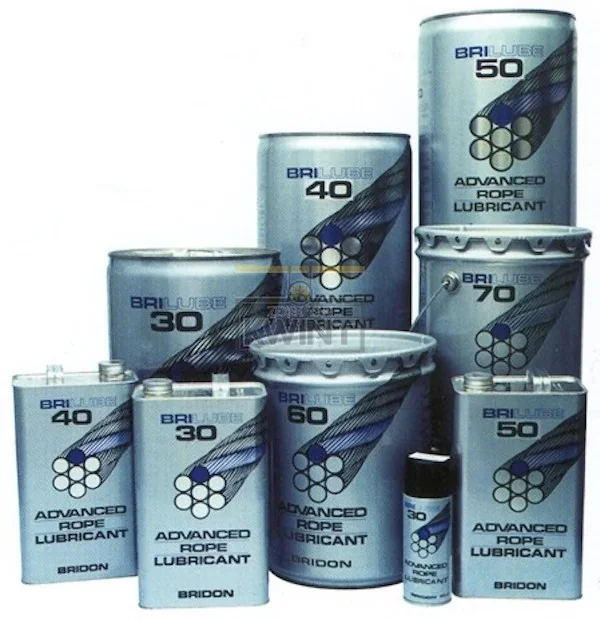
Brilube Advanced Rope Dressing
Ropes are like any other machine and to achieve maximum operating life in service lubrication must be applied. The type of service lubricant and frequency of application varies with the rope construction the operating conditions and its functional application. Bridon's unequalled experience in the world of wire rope manufacture and many years spent in the development of specialist in service lubricants have been used in the formulation of the Brilube range of products. Brilube's advanced formulation with proven performance helps to get the best from your rope. Brilube 30, 40 and 50 can be applied by brush, drip feed or portable pressurised sprayer. Brilube 60 and 70 can be pressure applied using in-line application systems which are available to suite a wide range of rope sizes and constructions. These systems operate by forcing the lubricant into the rope under high pressure, whilst simultaneously cleaning the rope and removing the moisture, residual lubricant and contaminants. Advanced corrosion protection High lubricity Reduced fling off Enhanced rope life Effective penetration Easy application
View product →
Celik Halat General Purpose Steel Wire Rope - 6x7 FC
Steel wire rope is an engineered product composed of multiple steel wires twisted into strands, which are then laid around a central core. This structure gives the rope its superior strength, flexibility, and durability for a wide array of heavy-duty applications across industries. Construction and components A steel wire rope is a sophisticated machine with several interdependent parts. • Wires: These are the smallest components, typically made from high-carbon steel, alloy steel, or stainless steel. Thicker wires offer better abrasion resistance, while thinner wires provide greater flexibility. • Strands: Groups of wires are twisted together in a specific pattern to form a single strand. The number of wires per strand and their arrangement determine the rope's characteristics, such as flexibility and wear resistance. • Core: The core is the central part of the rope that supports the strands and helps maintain their position under load. o Independent Wire Rope Core (IWRC): A full wire rope serves as the core, offering the highest strength and resistance to crushing and heat. o Fibre Core (FC): Made from natural or synthetic fibers, this core provides excellent flexibility and elasticity. It is lighter than a steel core but less resistant to crushing. • Lubrication: A specialized lubricant is applied during manufacturing and throughout the rope's life to reduce friction between wires and strands and prevent corrosion. Types of steel wire rope Wire ropes are categorized based on their material, coating, and construction. • Galvanized wire rope: A zinc coating provides a corrosion-resistant layer, making it ideal for outdoor or general-purpose use where the rope is exposed to weather. • Stainless steel wire rope: Made from stainless steel alloys, these ropes offer maximum resistance to corrosion and chemicals. They are essential for marine, food processing, and pharmaceutical applications. • Plastic-coated wire rope: A protective layer of PVC or another polymer is applied over the rope to add abrasion resistance and protect the wires from external damage. • Rotation-resistant rope: Designed with strands laid in opposing directions, this construction minimizes a suspended load's tendency to twist or spin. It is critical for lifting applications with a single-line hoist. • Compacted strand rope: Manufactured by compacting the strands, this rope type has a smoother outer surface. This increases its breaking strength and resistance to wear and crushing. Key applications Steel wire rope is a crucial component in numerous heavy-duty tasks across many industries. • Construction: Used for cranes, hoists, and scaffolding to lift heavy materials and machinery. • Marine and offshore: Used for rigging, mooring, fishing, and towing in corrosive saltwater environments. • Mining: Vital for hoisting equipment and materials from mines. • Aerospace: Supports aircraft control systems and other critical mechanisms. • Transportation: Serves as a vital component in cable cars, elevators, and for tensioning suspension bridges. Selection guidelines Choosing the right wire rope is critical for safety and efficiency. The correct selection depends on several factors. • Application: Consider the primary task—is it for lifting, pulling, or support? • Load capacity (WLL): The Working Load Limit must exceed the maximum expected load, factoring in an appropriate safety margin. • Environment: For corrosive or wet conditions, galvanized or stainless steel is necessary. For high-temperature environments, an IWRC is required. • Flexibility vs. abrasion: High-flexibility ropes with more wires are better for bending over sheaves, while ropes with fewer, thicker wires offer greater resistance to abrasion. • Rotation resistance: Select a rotation-resistant rope for single-line lifting to prevent the load from spinning. Safety and maintenance Proper maintenance and regular inspection are essential to ensure the longevity and safety of steel wire rope. • Regular inspections: Before each use, inspect for signs of wear, broken wires, corrosion, or kinks. A complete inspection by a competent person should be conducted at least every three months. • Proper lubrication: Apply fresh lubrication periodically to minimize internal friction and prevent corrosion, as the manufacturer's original lubricant will deplete over time. • Correct handling: Never drag a rope through dirt or gravel. Install and spool it correctly on drums and sheaves to prevent kinking, crushing, and excessive wear. • Proper storage: Store rope in a clean, dry, and well-ventilated area away from direct contact with the ground and corrosive materials. • Replacement: Immediately withdraw any damaged or compromised rope from service and destroy it to prevent re-use.
View product →
Celik Halat General Purpose Steel Wire Rope - Low Rotation 18x7 FC
Steel wire rope is an engineered product composed of multiple steel wires twisted into strands, which are then laid around a central core. This structure gives the rope its superior strength, flexibility, and durability for a wide array of heavy-duty applications across industries. Construction and components A steel wire rope is a sophisticated machine with several interdependent parts. • Wires: These are the smallest components, typically made from high-carbon steel, alloy steel, or stainless steel. Thicker wires offer better abrasion resistance, while thinner wires provide greater flexibility. • Strands: Groups of wires are twisted together in a specific pattern to form a single strand. The number of wires per strand and their arrangement determine the rope's characteristics, such as flexibility and wear resistance. • Core: The core is the central part of the rope that supports the strands and helps maintain their position under load. o Independent Wire Rope Core (IWRC): A full wire rope serves as the core, offering the highest strength and resistance to crushing and heat. o Fibre Core (FC): Made from natural or synthetic fibers, this core provides excellent flexibility and elasticity. It is lighter than a steel core but less resistant to crushing. • Lubrication: A specialized lubricant is applied during manufacturing and throughout the rope's life to reduce friction between wires and strands and prevent corrosion. Types of steel wire rope Wire ropes are categorized based on their material, coating, and construction. • Galvanized wire rope: A zinc coating provides a corrosion-resistant layer, making it ideal for outdoor or general-purpose use where the rope is exposed to weather. • Stainless steel wire rope: Made from stainless steel alloys, these ropes offer maximum resistance to corrosion and chemicals. They are essential for marine, food processing, and pharmaceutical applications. • Plastic-coated wire rope: A protective layer of PVC or another polymer is applied over the rope to add abrasion resistance and protect the wires from external damage. • Rotation-resistant rope: Designed with strands laid in opposing directions, this construction minimizes a suspended load's tendency to twist or spin. It is critical for lifting applications with a single-line hoist. • Compacted strand rope: Manufactured by compacting the strands, this rope type has a smoother outer surface. This increases its breaking strength and resistance to wear and crushing. Key applications Steel wire rope is a crucial component in numerous heavy-duty tasks across many industries. • Construction: Used for cranes, hoists, and scaffolding to lift heavy materials and machinery. • Marine and offshore: Used for rigging, mooring, fishing, and towing in corrosive saltwater environments. • Mining: Vital for hoisting equipment and materials from mines. • Aerospace: Supports aircraft control systems and other critical mechanisms. • Transportation: Serves as a vital component in cable cars, elevators, and for tensioning suspension bridges. Selection guidelines Choosing the right wire rope is critical for safety and efficiency. The correct selection depends on several factors. • Application: Consider the primary task—is it for lifting, pulling, or support? • Load capacity (WLL): The Working Load Limit must exceed the maximum expected load, factoring in an appropriate safety margin. • Environment: For corrosive or wet conditions, galvanized or stainless steel is necessary. For high-temperature environments, an IWRC is required. • Flexibility vs. abrasion: High-flexibility ropes with more wires are better for bending over sheaves, while ropes with fewer, thicker wires offer greater resistance to abrasion. • Rotation resistance: Select a rotation-resistant rope for single-line lifting to prevent the load from spinning. Safety and maintenance Proper maintenance and regular inspection are essential to ensure the longevity and safety of steel wire rope. • Regular inspections: Before each use, inspect for signs of wear, broken wires, corrosion, or kinks. A complete inspection by a competent person should be conducted at least every three months. • Proper lubrication: Apply fresh lubrication periodically to minimize internal friction and prevent corrosion, as the manufacturer's original lubricant will deplete over time. • Correct handling: Never drag a rope through dirt or gravel. Install and spool it correctly on drums and sheaves to prevent kinking, crushing, and excessive wear. • Proper storage: Store rope in a clean, dry, and well-ventilated area away from direct contact with the ground and corrosive materials. • Replacement: Immediately withdraw any damaged or compromised rope from service and destroy it to prevent re-use.
View product →Celik Halat General Purpose Steel Wire Rope - Low Rotation 18x7 IWRC
Steel wire rope is an engineered product composed of multiple steel wires twisted into strands, which are then laid around a central core. This structure gives the rope its superior strength, flexibility, and durability for a wide array of heavy-duty applications across industries. Construction and components A steel wire rope is a sophisticated machine with several interdependent parts. • Wires: These are the smallest components, typically made from high-carbon steel, alloy steel, or stainless steel. Thicker wires offer better abrasion resistance, while thinner wires provide greater flexibility. • Strands: Groups of wires are twisted together in a specific pattern to form a single strand. The number of wires per strand and their arrangement determine the rope's characteristics, such as flexibility and wear resistance. • Core: The core is the central part of the rope that supports the strands and helps maintain their position under load. o Independent Wire Rope Core (IWRC): A full wire rope serves as the core, offering the highest strength and resistance to crushing and heat. o Fibre Core (FC): Made from natural or synthetic fibers, this core provides excellent flexibility and elasticity. It is lighter than a steel core but less resistant to crushing. • Lubrication: A specialized lubricant is applied during manufacturing and throughout the rope's life to reduce friction between wires and strands and prevent corrosion. Types of steel wire rope Wire ropes are categorized based on their material, coating, and construction. • Galvanized wire rope: A zinc coating provides a corrosion-resistant layer, making it ideal for outdoor or general-purpose use where the rope is exposed to weather. • Stainless steel wire rope: Made from stainless steel alloys, these ropes offer maximum resistance to corrosion and chemicals. They are essential for marine, food processing, and pharmaceutical applications. • Plastic-coated wire rope: A protective layer of PVC or another polymer is applied over the rope to add abrasion resistance and protect the wires from external damage. • Rotation-resistant rope: Designed with strands laid in opposing directions, this construction minimizes a suspended load's tendency to twist or spin. It is critical for lifting applications with a single-line hoist. • Compacted strand rope: Manufactured by compacting the strands, this rope type has a smoother outer surface. This increases its breaking strength and resistance to wear and crushing. Key applications Steel wire rope is a crucial component in numerous heavy-duty tasks across many industries. • Construction: Used for cranes, hoists, and scaffolding to lift heavy materials and machinery. • Marine and offshore: Used for rigging, mooring, fishing, and towing in corrosive saltwater environments. • Mining: Vital for hoisting equipment and materials from mines. • Aerospace: Supports aircraft control systems and other critical mechanisms. • Transportation: Serves as a vital component in cable cars, elevators, and for tensioning suspension bridges. Selection guidelines Choosing the right wire rope is critical for safety and efficiency. The correct selection depends on several factors. • Application: Consider the primary task—is it for lifting, pulling, or support? • Load capacity (WLL): The Working Load Limit must exceed the maximum expected load, factoring in an appropriate safety margin. • Environment: For corrosive or wet conditions, galvanized or stainless steel is necessary. For high-temperature environments, an IWRC is required. • Flexibility vs. abrasion: High-flexibility ropes with more wires are better for bending over sheaves, while ropes with fewer, thicker wires offer greater resistance to abrasion. • Rotation resistance: Select a rotation-resistant rope for single-line lifting to prevent the load from spinning. Safety and maintenance Proper maintenance and regular inspection are essential to ensure the longevity and safety of steel wire rope. • Regular inspections: Before each use, inspect for signs of wear, broken wires, corrosion, or kinks. A complete inspection by a competent person should be conducted at least every three months. • Proper lubrication: Apply fresh lubrication periodically to minimize internal friction and prevent corrosion, as the manufacturer's original lubricant will deplete over time. • Correct handling: Never drag a rope through dirt or gravel. Install and spool it correctly on drums and sheaves to prevent kinking, crushing, and excessive wear. • Proper storage: Store rope in a clean, dry, and well-ventilated area away from direct contact with the ground and corrosive materials. • Replacement: Immediately withdraw any damaged or compromised rope from service and destroy it to prevent re-use.
View product →
Celik Halat General Purpose Steel Wire Rope 6x19S FC
Steel wire rope is an engineered product composed of multiple steel wires twisted into strands, which are then laid around a central core. This structure gives the rope its superior strength, flexibility, and durability for a wide array of heavy-duty applications across industries. Construction and components A steel wire rope is a sophisticated machine with several interdependent parts. • Wires: These are the smallest components, typically made from high-carbon steel, alloy steel, or stainless steel. Thicker wires offer better abrasion resistance, while thinner wires provide greater flexibility. • Strands: Groups of wires are twisted together in a specific pattern to form a single strand. The number of wires per strand and their arrangement determine the rope's characteristics, such as flexibility and wear resistance. • Core: The core is the central part of the rope that supports the strands and helps maintain their position under load. o Independent Wire Rope Core (IWRC): A full wire rope serves as the core, offering the highest strength and resistance to crushing and heat. o Fibre Core (FC): Made from natural or synthetic fibers, this core provides excellent flexibility and elasticity. It is lighter than a steel core but less resistant to crushing. • Lubrication: A specialized lubricant is applied during manufacturing and throughout the rope's life to reduce friction between wires and strands and prevent corrosion. Types of steel wire rope Wire ropes are categorized based on their material, coating, and construction. • Galvanized wire rope: A zinc coating provides a corrosion-resistant layer, making it ideal for outdoor or general-purpose use where the rope is exposed to weather. • Stainless steel wire rope: Made from stainless steel alloys, these ropes offer maximum resistance to corrosion and chemicals. They are essential for marine, food processing, and pharmaceutical applications. • Plastic-coated wire rope: A protective layer of PVC or another polymer is applied over the rope to add abrasion resistance and protect the wires from external damage. • Rotation-resistant rope: Designed with strands laid in opposing directions, this construction minimizes a suspended load's tendency to twist or spin. It is critical for lifting applications with a single-line hoist. • Compacted strand rope: Manufactured by compacting the strands, this rope type has a smoother outer surface. This increases its breaking strength and resistance to wear and crushing. Key applications Steel wire rope is a crucial component in numerous heavy-duty tasks across many industries. • Construction: Used for cranes, hoists, and scaffolding to lift heavy materials and machinery. • Marine and offshore: Used for rigging, mooring, fishing, and towing in corrosive saltwater environments. • Mining: Vital for hoisting equipment and materials from mines. • Aerospace: Supports aircraft control systems and other critical mechanisms. • Transportation: Serves as a vital component in cable cars, elevators, and for tensioning suspension bridges. Selection guidelines Choosing the right wire rope is critical for safety and efficiency. The correct selection depends on several factors. • Application: Consider the primary task—is it for lifting, pulling, or support? • Load capacity (WLL): The Working Load Limit must exceed the maximum expected load, factoring in an appropriate safety margin. • Environment: For corrosive or wet conditions, galvanized or stainless steel is necessary. For high-temperature environments, an IWRC is required. • Flexibility vs. abrasion: High-flexibility ropes with more wires are better for bending over sheaves, while ropes with fewer, thicker wires offer greater resistance to abrasion. • Rotation resistance: Select a rotation-resistant rope for single-line lifting to prevent the load from spinning. Safety and maintenance Proper maintenance and regular inspection are essential to ensure the longevity and safety of steel wire rope. • Regular inspections: Before each use, inspect for signs of wear, broken wires, corrosion, or kinks. A complete inspection by a competent person should be conducted at least every three months. • Proper lubrication: Apply fresh lubrication periodically to minimize internal friction and prevent corrosion, as the manufacturer's original lubricant will deplete over time. • Correct handling: Never drag a rope through dirt or gravel. Install and spool it correctly on drums and sheaves to prevent kinking, crushing, and excessive wear. • Proper storage: Store rope in a clean, dry, and well-ventilated area away from direct contact with the ground and corrosive materials. • Replacement: Immediately withdraw any damaged or compromised rope from service and destroy it to prevent re-use.
View product →
Celik Halat General Purpose Steel Wire Rope 6x19S IWRC
Steel wire rope is an engineered product composed of multiple steel wires twisted into strands, which are then laid around a central core. This structure gives the rope its superior strength, flexibility, and durability for a wide array of heavy-duty applications across industries. Construction and components A steel wire rope is a sophisticated machine with several interdependent parts. • Wires: These are the smallest components, typically made from high-carbon steel, alloy steel, or stainless steel. Thicker wires offer better abrasion resistance, while thinner wires provide greater flexibility. • Strands: Groups of wires are twisted together in a specific pattern to form a single strand. The number of wires per strand and their arrangement determine the rope's characteristics, such as flexibility and wear resistance. • Core: The core is the central part of the rope that supports the strands and helps maintain their position under load. o Independent Wire Rope Core (IWRC): A full wire rope serves as the core, offering the highest strength and resistance to crushing and heat. o Fibre Core (FC): Made from natural or synthetic fibers, this core provides excellent flexibility and elasticity. It is lighter than a steel core but less resistant to crushing. • Lubrication: A specialized lubricant is applied during manufacturing and throughout the rope's life to reduce friction between wires and strands and prevent corrosion. Types of steel wire rope Wire ropes are categorized based on their material, coating, and construction. • Galvanized wire rope: A zinc coating provides a corrosion-resistant layer, making it ideal for outdoor or general-purpose use where the rope is exposed to weather. • Stainless steel wire rope: Made from stainless steel alloys, these ropes offer maximum resistance to corrosion and chemicals. They are essential for marine, food processing, and pharmaceutical applications. • Plastic-coated wire rope: A protective layer of PVC or another polymer is applied over the rope to add abrasion resistance and protect the wires from external damage. • Rotation-resistant rope: Designed with strands laid in opposing directions, this construction minimizes a suspended load's tendency to twist or spin. It is critical for lifting applications with a single-line hoist. • Compacted strand rope: Manufactured by compacting the strands, this rope type has a smoother outer surface. This increases its breaking strength and resistance to wear and crushing. Key applications Steel wire rope is a crucial component in numerous heavy-duty tasks across many industries. • Construction: Used for cranes, hoists, and scaffolding to lift heavy materials and machinery. • Marine and offshore: Used for rigging, mooring, fishing, and towing in corrosive saltwater environments. • Mining: Vital for hoisting equipment and materials from mines. • Aerospace: Supports aircraft control systems and other critical mechanisms. • Transportation: Serves as a vital component in cable cars, elevators, and for tensioning suspension bridges. Selection guidelines Choosing the right wire rope is critical for safety and efficiency. The correct selection depends on several factors. • Application: Consider the primary task—is it for lifting, pulling, or support? • Load capacity (WLL): The Working Load Limit must exceed the maximum expected load, factoring in an appropriate safety margin. • Environment: For corrosive or wet conditions, galvanized or stainless steel is necessary. For high-temperature environments, an IWRC is required. • Flexibility vs. abrasion: High-flexibility ropes with more wires are better for bending over sheaves, while ropes with fewer, thicker wires offer greater resistance to abrasion. • Rotation resistance: Select a rotation-resistant rope for single-line lifting to prevent the load from spinning. Safety and maintenance Proper maintenance and regular inspection are essential to ensure the longevity and safety of steel wire rope. • Regular inspections: Before each use, inspect for signs of wear, broken wires, corrosion, or kinks. A complete inspection by a competent person should be conducted at least every three months. • Proper lubrication: Apply fresh lubrication periodically to minimize internal friction and prevent corrosion, as the manufacturer's original lubricant will deplete over time. • Correct handling: Never drag a rope through dirt or gravel. Install and spool it correctly on drums and sheaves to prevent kinking, crushing, and excessive wear. • Proper storage: Store rope in a clean, dry, and well-ventilated area away from direct contact with the ground and corrosive materials. • Replacement: Immediately withdraw any damaged or compromised rope from service and destroy it to prevent re-use.
View product →
Celik Halat General Purpose Steel Wire Rope 6x36WS FC
Steel wire rope is an engineered product composed of multiple steel wires twisted into strands, which are then laid around a central core. This structure gives the rope its superior strength, flexibility, and durability for a wide array of heavy-duty applications across industries. Construction and components A steel wire rope is a sophisticated machine with several interdependent parts. • Wires: These are the smallest components, typically made from high-carbon steel, alloy steel, or stainless steel. Thicker wires offer better abrasion resistance, while thinner wires provide greater flexibility. • Strands: Groups of wires are twisted together in a specific pattern to form a single strand. The number of wires per strand and their arrangement determine the rope's characteristics, such as flexibility and wear resistance. • Core: The core is the central part of the rope that supports the strands and helps maintain their position under load. o Independent Wire Rope Core (IWRC): A full wire rope serves as the core, offering the highest strength and resistance to crushing and heat. o Fibre Core (FC): Made from natural or synthetic fibers, this core provides excellent flexibility and elasticity. It is lighter than a steel core but less resistant to crushing. • Lubrication: A specialized lubricant is applied during manufacturing and throughout the rope's life to reduce friction between wires and strands and prevent corrosion. Types of steel wire rope Wire ropes are categorized based on their material, coating, and construction. • Galvanized wire rope: A zinc coating provides a corrosion-resistant layer, making it ideal for outdoor or general-purpose use where the rope is exposed to weather. • Stainless steel wire rope: Made from stainless steel alloys, these ropes offer maximum resistance to corrosion and chemicals. They are essential for marine, food processing, and pharmaceutical applications. • Plastic-coated wire rope: A protective layer of PVC or another polymer is applied over the rope to add abrasion resistance and protect the wires from external damage. • Rotation-resistant rope: Designed with strands laid in opposing directions, this construction minimizes a suspended load's tendency to twist or spin. It is critical for lifting applications with a single-line hoist. • Compacted strand rope: Manufactured by compacting the strands, this rope type has a smoother outer surface. This increases its breaking strength and resistance to wear and crushing. Key applications Steel wire rope is a crucial component in numerous heavy-duty tasks across many industries. • Construction: Used for cranes, hoists, and scaffolding to lift heavy materials and machinery. • Marine and offshore: Used for rigging, mooring, fishing, and towing in corrosive saltwater environments. • Mining: Vital for hoisting equipment and materials from mines. • Aerospace: Supports aircraft control systems and other critical mechanisms. • Transportation: Serves as a vital component in cable cars, elevators, and for tensioning suspension bridges. Selection guidelines Choosing the right wire rope is critical for safety and efficiency. The correct selection depends on several factors. • Application: Consider the primary task—is it for lifting, pulling, or support? • Load capacity (WLL): The Working Load Limit must exceed the maximum expected load, factoring in an appropriate safety margin. • Environment: For corrosive or wet conditions, galvanized or stainless steel is necessary. For high-temperature environments, an IWRC is required. • Flexibility vs. abrasion: High-flexibility ropes with more wires are better for bending over sheaves, while ropes with fewer, thicker wires offer greater resistance to abrasion. • Rotation resistance: Select a rotation-resistant rope for single-line lifting to prevent the load from spinning. Safety and maintenance Proper maintenance and regular inspection are essential to ensure the longevity and safety of steel wire rope. • Regular inspections: Before each use, inspect for signs of wear, broken wires, corrosion, or kinks. A complete inspection by a competent person should be conducted at least every three months. • Proper lubrication: Apply fresh lubrication periodically to minimize internal friction and prevent corrosion, as the manufacturer's original lubricant will deplete over time. • Correct handling: Never drag a rope through dirt or gravel. Install and spool it correctly on drums and sheaves to prevent kinking, crushing, and excessive wear. • Proper storage: Store rope in a clean, dry, and well-ventilated area away from direct contact with the ground and corrosive materials. • Replacement: Immediately withdraw any damaged or compromised rope from service and destroy it to prevent re-use.
View product →
Celik Halat General Purpose Steel Wire Rope 6x636WS IWRC
Steel wire rope is an engineered product composed of multiple steel wires twisted into strands, which are then laid around a central core. This structure gives the rope its superior strength, flexibility, and durability for a wide array of heavy-duty applications across industries. Construction and components A steel wire rope is a sophisticated machine with several interdependent parts. • Wires: These are the smallest components, typically made from high-carbon steel, alloy steel, or stainless steel. Thicker wires offer better abrasion resistance, while thinner wires provide greater flexibility. • Strands: Groups of wires are twisted together in a specific pattern to form a single strand. The number of wires per strand and their arrangement determine the rope's characteristics, such as flexibility and wear resistance. • Core: The core is the central part of the rope that supports the strands and helps maintain their position under load. o Independent Wire Rope Core (IWRC): A full wire rope serves as the core, offering the highest strength and resistance to crushing and heat. o Fibre Core (FC): Made from natural or synthetic fibers, this core provides excellent flexibility and elasticity. It is lighter than a steel core but less resistant to crushing. • Lubrication: A specialized lubricant is applied during manufacturing and throughout the rope's life to reduce friction between wires and strands and prevent corrosion. Types of steel wire rope Wire ropes are categorized based on their material, coating, and construction. • Galvanized wire rope: A zinc coating provides a corrosion-resistant layer, making it ideal for outdoor or general-purpose use where the rope is exposed to weather. • Stainless steel wire rope: Made from stainless steel alloys, these ropes offer maximum resistance to corrosion and chemicals. They are essential for marine, food processing, and pharmaceutical applications. • Plastic-coated wire rope: A protective layer of PVC or another polymer is applied over the rope to add abrasion resistance and protect the wires from external damage. • Rotation-resistant rope: Designed with strands laid in opposing directions, this construction minimizes a suspended load's tendency to twist or spin. It is critical for lifting applications with a single-line hoist. • Compacted strand rope: Manufactured by compacting the strands, this rope type has a smoother outer surface. This increases its breaking strength and resistance to wear and crushing. Key applications Steel wire rope is a crucial component in numerous heavy-duty tasks across many industries. • Construction: Used for cranes, hoists, and scaffolding to lift heavy materials and machinery. • Marine and offshore: Used for rigging, mooring, fishing, and towing in corrosive saltwater environments. • Mining: Vital for hoisting equipment and materials from mines. • Aerospace: Supports aircraft control systems and other critical mechanisms. • Transportation: Serves as a vital component in cable cars, elevators, and for tensioning suspension bridges. Selection guidelines Choosing the right wire rope is critical for safety and efficiency. The correct selection depends on several factors. • Application: Consider the primary task—is it for lifting, pulling, or support? • Load capacity (WLL): The Working Load Limit must exceed the maximum expected load, factoring in an appropriate safety margin. • Environment: For corrosive or wet conditions, galvanized or stainless steel is necessary. For high-temperature environments, an IWRC is required. • Flexibility vs. abrasion: High-flexibility ropes with more wires are better for bending over sheaves, while ropes with fewer, thicker wires offer greater resistance to abrasion. • Rotation resistance: Select a rotation-resistant rope for single-line lifting to prevent the load from spinning. Safety and maintenance Proper maintenance and regular inspection are essential to ensure the longevity and safety of steel wire rope. • Regular inspections: Before each use, inspect for signs of wear, broken wires, corrosion, or kinks. A complete inspection by a competent person should be conducted at least every three months. • Proper lubrication: Apply fresh lubrication periodically to minimize internal friction and prevent corrosion, as the manufacturer's original lubricant will deplete over time. • Correct handling: Never drag a rope through dirt or gravel. Install and spool it correctly on drums and sheaves to prevent kinking, crushing, and excessive wear. • Proper storage: Store rope in a clean, dry, and well-ventilated area away from direct contact with the ground and corrosive materials. • Replacement: Immediately withdraw any damaged or compromised rope from service and destroy it to prevent re-use.
View product →
Celik Halat General Purpose Steel Wire Rope 6x7 IWRC
Steel wire rope is an engineered product composed of multiple steel wires twisted into strands, which are then laid around a central core. This structure gives the rope its superior strength, flexibility, and durability for a wide array of heavy-duty applications across industries. Construction and components A steel wire rope is a sophisticated machine with several interdependent parts. • Wires: These are the smallest components, typically made from high-carbon steel, alloy steel, or stainless steel. Thicker wires offer better abrasion resistance, while thinner wires provide greater flexibility. • Strands: Groups of wires are twisted together in a specific pattern to form a single strand. The number of wires per strand and their arrangement determine the rope's characteristics, such as flexibility and wear resistance. • Core: The core is the central part of the rope that supports the strands and helps maintain their position under load. o Independent Wire Rope Core (IWRC): A full wire rope serves as the core, offering the highest strength and resistance to crushing and heat. o Fibre Core (FC): Made from natural or synthetic fibers, this core provides excellent flexibility and elasticity. It is lighter than a steel core but less resistant to crushing. • Lubrication: A specialized lubricant is applied during manufacturing and throughout the rope's life to reduce friction between wires and strands and prevent corrosion. Types of steel wire rope Wire ropes are categorized based on their material, coating, and construction. • Galvanized wire rope: A zinc coating provides a corrosion-resistant layer, making it ideal for outdoor or general-purpose use where the rope is exposed to weather. • Stainless steel wire rope: Made from stainless steel alloys, these ropes offer maximum resistance to corrosion and chemicals. They are essential for marine, food processing, and pharmaceutical applications. • Plastic-coated wire rope: A protective layer of PVC or another polymer is applied over the rope to add abrasion resistance and protect the wires from external damage. • Rotation-resistant rope: Designed with strands laid in opposing directions, this construction minimizes a suspended load's tendency to twist or spin. It is critical for lifting applications with a single-line hoist. • Compacted strand rope: Manufactured by compacting the strands, this rope type has a smoother outer surface. This increases its breaking strength and resistance to wear and crushing. Key applications Steel wire rope is a crucial component in numerous heavy-duty tasks across many industries. • Construction: Used for cranes, hoists, and scaffolding to lift heavy materials and machinery. • Marine and offshore: Used for rigging, mooring, fishing, and towing in corrosive saltwater environments. • Mining: Vital for hoisting equipment and materials from mines. • Aerospace: Supports aircraft control systems and other critical mechanisms. • Transportation: Serves as a vital component in cable cars, elevators, and for tensioning suspension bridges. Selection guidelines Choosing the right wire rope is critical for safety and efficiency. The correct selection depends on several factors. • Application: Consider the primary task—is it for lifting, pulling, or support? • Load capacity (WLL): The Working Load Limit must exceed the maximum expected load, factoring in an appropriate safety margin. • Environment: For corrosive or wet conditions, galvanized or stainless steel is necessary. For high-temperature environments, an IWRC is required. • Flexibility vs. abrasion: High-flexibility ropes with more wires are better for bending over sheaves, while ropes with fewer, thicker wires offer greater resistance to abrasion. • Rotation resistance: Select a rotation-resistant rope for single-line lifting to prevent the load from spinning. Safety and maintenance Proper maintenance and regular inspection are essential to ensure the longevity and safety of steel wire rope. • Regular inspections: Before each use, inspect for signs of wear, broken wires, corrosion, or kinks. A complete inspection by a competent person should be conducted at least every three months. • Proper lubrication: Apply fresh lubrication periodically to minimize internal friction and prevent corrosion, as the manufacturer's original lubricant will deplete over time. • Correct handling: Never drag a rope through dirt or gravel. Install and spool it correctly on drums and sheaves to prevent kinking, crushing, and excessive wear. • Proper storage: Store rope in a clean, dry, and well-ventilated area away from direct contact with the ground and corrosive materials. • Replacement: Immediately withdraw any damaged or compromised rope from service and destroy it to prevent re-use.
View product →
Natural & Synthetic Fibre Ropes - Cotton 3 Strand
View product →
Natural & Synthetic Fibre Ropes - Nylon 3 Strand
View product →
Natural & Synthetic Fibre Ropes - Polyester 3 Strand
View product →
Natural & Synthetic Fibre Ropes - Polyethylene 3-6 Strand
View product →
Natural & Synthetic Fibre Ropes - Polypropylene 3 & 8 Strand
View product →
Salva-Vida Vertical Rope Greaser Assembly
The vertical rope greaser assembly must be securely elevated with the slings before use. The vertical rope greaser assembly is used by placing the polyurethane insert over the steel wire rope which is then secured between the two halves of the assembly. Rope lubricant is then poured into the rope greaser. The steel wire rope is then pulled through thebarrel and insert which will lubricate the rope. The polyurethane insert prevents any excess lubricant from being used/wasted. FEATURES: • Supplied complete with 2 x 1m long chain slings. • Applications can only be used with steel wire rope. • 13mm to 60mm wire rope can be used with the greaser assembly. • Polyurethane inserts must be used with the correct steel wire rope size. • A 3mm rubber seal is incorporated between the 2 halves of the assembly. • 23 Diameter lifting lugs are available on each halve of the assembly.
View product →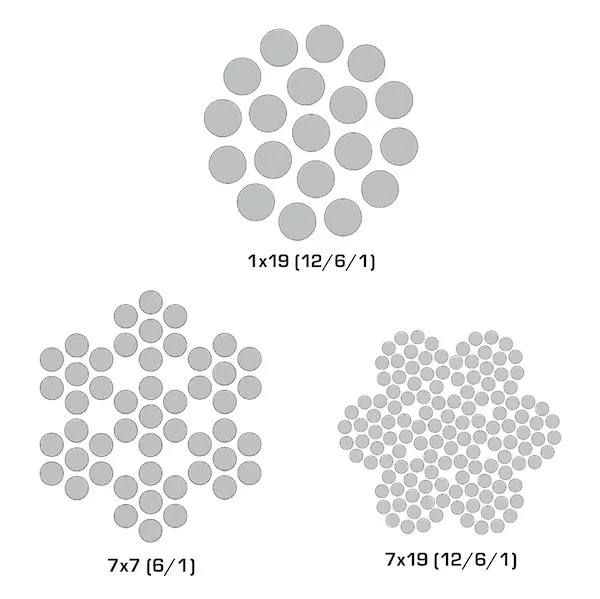
Stainless Steel Wire Rope
Stainless steel wire rope provides all the mechanical benefits of galvanized rope with additional advantages—superior corrosion, rust, and chemical resistance. This makes it ideal for harsh environments such as offshore oil drilling, food processing, medical devices, and coastal or saltwater applications. Its low maintenance and long lifespan justify its higher initial cost for mission-critical duties. Key purposes and applications ◦Corrosion resistance: The chromium in stainless steel provides superior resistance to rust and corrosion, making it the best choice for harsh conditions like marine environments, offshore platforms, and food processing plants. ◦Permanent Lifeline Installations : Due to the nature of permanent lifeline installation, stainless steel wire rope is utlised to ensure compatibility to OEM's components. ◦Heavy lifting and hoisting: It is used for a wide range of heavy-duty applications, including cranes, elevators, and cable cars, where strength and long-term performance are essential. ◦Architectural and decorative use: Its attractive, modern appearance and durability make it suitable for architectural applications like cable railings, balustrades, and supporting structures for vertical gardens. ◦Industrial and mechanical uses: It is used for control cables, slings, and general industrial applications requiring a strong, flexible, and long-lasting rope. ◦Specialized applications: Stainless steel wire rope's non-magnetic properties are beneficial in naval and aeronautical fields, while its low stretch is useful in various control and tensioning applications.
View product →
Wirelock Socket Compound Resin Kit
There are five main areas in which Wirelock® is the preferred socketing medium: • General Engineering Uses are extremely varied and include crane ropes, boom pendants, winches, lifting straps and mast stays. Wirelock should always be used when socketing P.F.V. ropes as the use of a molten metal will melt and vapourise the polymer in the valleys of the rope. • Structures These are generally long term applications such as suspended roofs for stadia, aircraft hangers and other diverse structures. • Bridges • Mining Wirelock is the only socketing medium that is currently approved in the UK for both man and materials winding. It is extensively used for the same purposes in the mines of South Africa, Australia and Canada. • Offshore Wirelock is the preferred socketing medium for offshore mooring systems worldwide. Moreover, it is the only socketing system that meets the requirements of D.N.V.’s Certification Notes No. 2.5 “Certification of Mooring Steel Wire Ropes” May 1995. It has both Lloyds approval and ABS type Approval. The shelf life of WIRELOCK® is eighteen (18) months (check label before use) from the date of manufacture.
View product →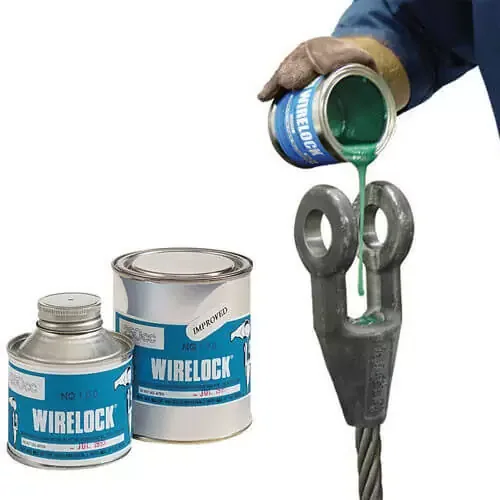
Wirelock® National Coal Board Resin Kits
There are five main areas in which Wirelock® is the preferred socketing medium: • General Engineering Uses are extremely varied and include crane ropes, boom pendants, winches, lifting straps and mast stays. Wirelock should always be used when socketing P.F.V. ropes as the use of a molten metal will melt and vapourise the polymer in the valleys of the rope. • Structures These are generally long term applications such as suspended roofs for stadia, aircraft hangers and other diverse structures. • Bridges • Mining Wirelock is the only socketing medium that is currently approved in the UK for both man and materials winding. It is extensively used for the same purposes in the mines of South Africa, Australia and Canada. • Offshore Wirelock is the preferred socketing medium for offshore mooring systems worldwide. Moreover, it is the only socketing system that meets the requirements of D.N.V.’s Certification Notes No. 2.5 “Certification of Mooring Steel Wire Ropes” May 1995. It has both Lloyds approval and ABS type Approval. The shelf life of WIRELOCK® is eighteen (18) months (check label before use) from the date of manufacture.
View product →